
In today's competitive product development environment, speed is everything. The ability to transform design concepts into physical prototypes within days rather than weeks provides crucial competitive advantages. Rapid prototyping technologies have revolutionized how products are developed, tested, and refined before committing to production investments.
The Value of Fast Prototyping
Traditional prototyping methods often required weeks or months of lead time. Creating prototype parts through conventional manufacturing processes demanded extensive tooling preparation, manual fabrication, or outsourcing with long turnaround times. These delays slowed design iteration, postponed testing, and extended overall development timelines.
Modern rapid prototyping compresses this timeline dramatically. With the right technologies and processes, designers can receive physical parts within 24-48 hours of submitting designs. This speed enables faster design iterations, earlier testing, quicker stakeholder feedback, and significantly reduced development timelines.
Key Benefits of Rapid Prototyping:
- Accelerated design iteration cycles
- Earlier physical testing and validation
- Reduced development timeline and costs
- Improved stakeholder communication with tangible parts
- Faster market entry with finished products
- Lower risk through early problem identification
3D Printing: The Foundation of Rapid Prototyping
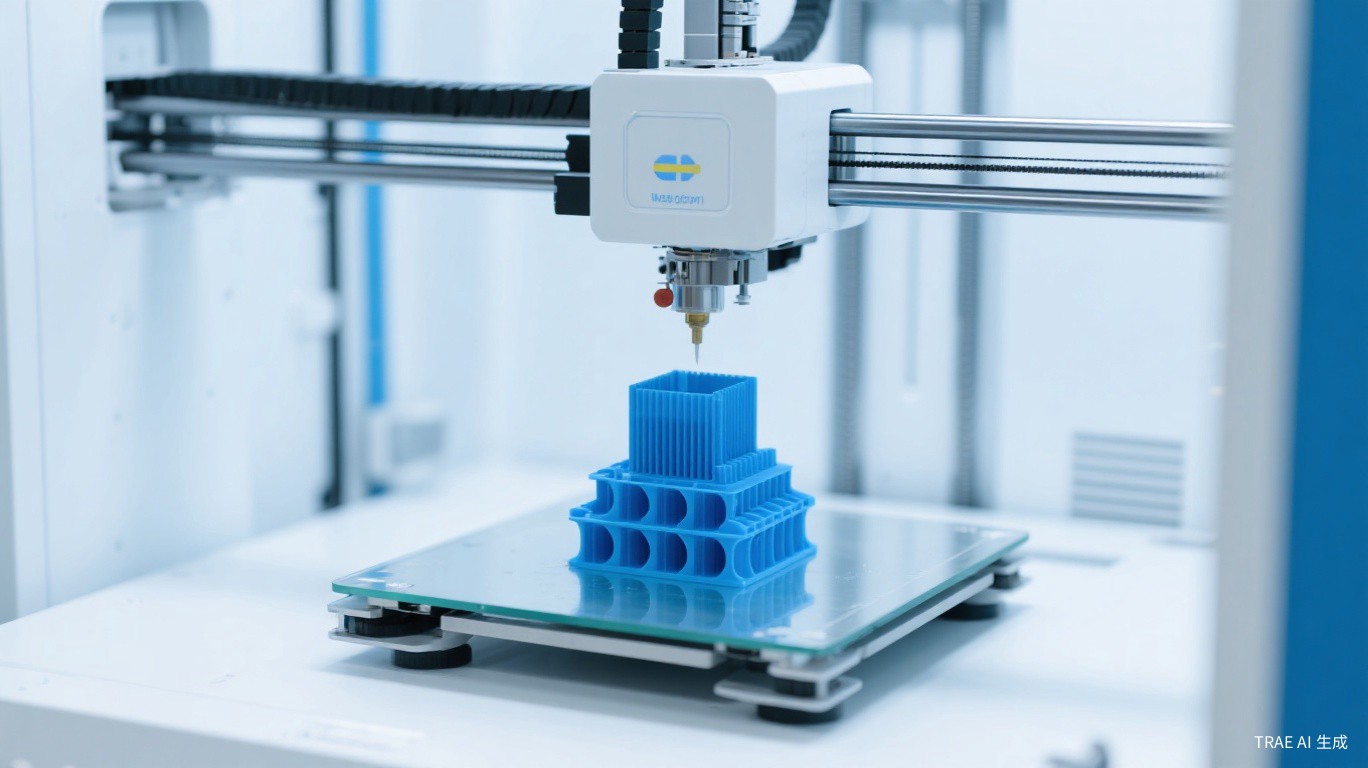
Additive manufacturing, commonly known as 3D printing, forms the foundation of most rapid prototyping programs. These technologies build parts layer by layer directly from digital design files, eliminating the need for tooling, molds, or extensive setup. Multiple 3D printing technologies serve different prototyping needs.
Fused deposition modeling (FDM) offers economical prototyping using thermoplastic materials. While surface quality and precision are moderate, FDM provides fast turnaround at low cost, ideal for initial concept models and basic functional testing. Stereolithography (SLA) and digital light processing (DLP) produce higher-resolution parts with excellent surface quality, suitable for detailed prototypes and presentation models.
Selective laser sintering (SLS) creates durable nylon parts without support structures, enabling complex geometries and functional testing. Metal 3D printing technologies including direct metal laser sintering (DMLS) produce metal prototypes suitable for functional testing under realistic conditions.
"3D printing transformed prototyping from a bottleneck into an accelerator. What once took weeks now takes hours, fundamentally changing how we approach product development."
CNC Prototyping: Precision and Material Options
While 3D printing excels for many prototyping needs, CNC machining remains essential for applications requiring precision, specific materials, or production-representative properties. CNC prototyping produces parts from actual production materials including metals, engineering plastics, and specialty materials that 3D printing cannot match.
CNC-machined prototypes provide accurate representation of production part properties including strength, stiffness, thermal behavior, and surface characteristics. This accuracy is crucial for functional testing where material properties significantly influence performance. CNC prototypes also achieve tighter tolerances than most 3D printing processes.
When to Choose CNC Prototyping:
- Functional testing requiring production material properties
- Prototypes needing tight dimensional tolerances
- Parts with critical surface finish requirements
- Metal prototypes for structural or thermal testing
- Low-volume production where tooling investment isn't justified
Choosing the Right Prototyping Method
Selecting appropriate prototyping methods depends on prototype purpose, required properties, timeline constraints, and budget considerations. Early-stage concept models benefit from fast, economical 3D printing. Functional prototypes requiring accurate material behavior demand CNC machining or advanced additive processes.
Consider what questions the prototype must answer. If visual appearance and basic geometry are primary concerns, economical FDM printing suffices. If the prototype must withstand mechanical loads, operate at elevated temperatures, or interface precisely with other components, CNC machining or higher-end 3D printing becomes necessary.
Prototyping Method Selection Guide:
- Concept Visualization: FDM 3D printing - fast, economical, moderate quality
- Presentation Models: SLA/DLP 3D printing - high resolution, excellent surfaces
- Functional Testing: SLS 3D printing or CNC machining - durable, accurate
- Production Representation: CNC machining - actual materials, tight tolerances
- Metal Prototypes: DMLS 3D printing or CNC machining - metal properties
Streamlining the Prototyping Process
Achieving 48-hour turnaround requires streamlined processes beyond just manufacturing speed. Efficient quote generation, automated order processing, optimized production scheduling, and quality control systems all contribute to rapid delivery. Working with prototyping partners who have invested in these capabilities ensures consistent fast turnaround.
Design preparation also impacts timeline. Submitting well-prepared CAD files with appropriate formats, complete specifications, and clear requirements eliminates delays caused by clarification requests or file corrections. Establishing preferred material and process specifications for routine prototyping needs further accelerates turnaround.
Time-to-Market Impact
The cumulative effect of rapid prototyping on overall development timelines is substantial. Each design iteration cycle compressed from weeks to days compounds across multiple iterations. Earlier testing identifies problems when corrections are least costly. Faster stakeholder reviews accelerate decision-making. All these factors combine to significantly reduce total development time.
Companies leveraging rapid prototyping effectively report 30-50% reductions in development timelines compared to traditional approaches. This acceleration translates directly into competitive advantages: earlier market entry, faster response to market changes, and more design iterations within fixed development windows.
For product development teams seeking to maximize innovation while minimizing development time, rapid prototyping capabilities are essential infrastructure. The investment in fast prototyping processes pays dividends across every product development project, enabling better products delivered faster to market.